5 Lessons From a Marvel Rivals Grandmaster Who Blamed His Teammates
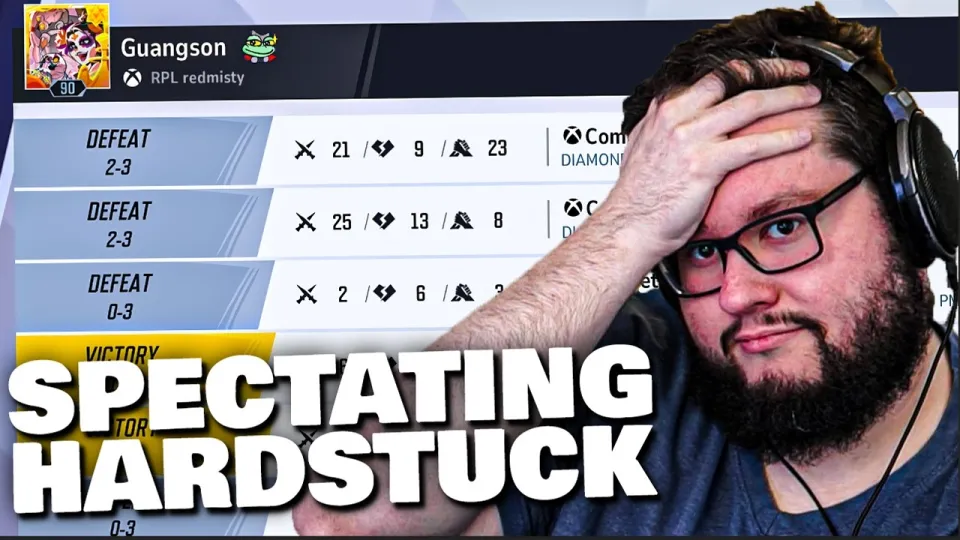
Video: I Spectated Someone Who Claimed To Be Hardstuck In Marvel Rivals
You can order the same kind of articles for your own video to boost it on YouTube and Google. Just message the Telegram bot @sat_sit_bot. It writes articles around your video, embeds the video and publishes them on popular niche websites (no ads). Your first 50 articles are free.
· based on the channel Flats
Marvel Rivals players who say they are hardstuck usually mean the matchmaker is holding them back, not their own play. A Grandmaster-level player who made exactly that claim got a full spectating review, and the footage showed the opposite: poor cooldown usage, missed health packs, a negative win rate, and a hero pool built on a Spider-Man main's habits. The breakdown comes from Flats, a former Overwatch pro turned analyst who now reviews Marvel Rivals matches live on his Twitch channel, where viewers can watch the same sessions and ask questions in chat.
What does it mean to be hardstuck in Marvel Rivals?
Being hardstuck means your rank has stopped moving for a long stretch of games even though you keep playing, and the usual explanation players reach for is bad teammates. Marvel Rivals makes that explanation tempting because its ranked ladder has been generous: the community widely reports that players can climb to Grandmaster with a win rate below 50 percent, since the system rewards volume and shields progress with protection points. The player in this session fit that pattern exactly — a negative win rate, a Grandmaster badge, and a firm belief that the team was the problem. The spectating format exists to test that belief against the actual recording.
Five habits that keep a Marvel Rivals player stuck
- Treating a support as a damage dealer. The player locked Cloak & Dagger and spent most of the match in Dagger form without cycling to Cloak for the utility. The community shorthand for this is playing Dagger and holding the Cloak — the hero's whole value comes from switching forms for healing, blind and escape, and ignoring half the kit removes the reason to pick the character.
- Misreading your own ultimate. He described his Invisible Woman ultimate as something that would give him a slap on the back and tell him to go out there — a self-buff to push with. In practice that ultimate is a large area heal and damage field for the team, and using it as a personal courage button wastes the biggest support cooldown in the kit.
- Not knowing the map. During the review he walked straight past a health pack while visibly searching for a health pack, a moment Flats exposed without saying a word. Map knowledge is free healing; players who do not know pack locations burn support resources and die to chip damage.
- Carrying a duelist mindset into every role. He was a Spider-Man main, and the dive instincts showed: he positioned like someone looking for a flank rather than someone responsible for keeping a team alive. The comment sections around this kind of review often note that dive players rarely take accountability for their own deaths.
- Blaming the team before reviewing the tape. The whole premise of the session was that teammates were holding him back. Ironically, the footage proved teammates can hold you back — just not in the direction he intended, because his own play was the drag on the lobby.
Why Marvel Rivals' ranked ladder lets weak play climb
Rank inflation is the structural reason a player like this can sit in Grandmaster and still play like a beginner. When the ladder hands out more points for a win than it removes for a loss, or protects players from demotion, the badge stops measuring skill and starts measuring hours played. That creates two problems: high-rank lobbies get mixed with players who never learned fundamentals, and the players themselves get confirmation that they belong there. A negative win rate at Grandmaster is the clearest signal of this — in a strict Elo system, that record would leave you below the middle of the ladder, not near the top. Metal-rank players watching the session said the state of Grandmaster saddened them, and that reaction is the point: the rank badge has stopped being a reliable promise about the player behind it.
The ego problem behind "my teammates are holding me back"
The most common failure in Marvel Rivals ranked is not mechanical — it is the refusal to review your own decisions. A player who believes the team is the problem never watches their own positioning, never notices a wasted ultimate, and never learns health pack routes, because none of those things fit the story. The session made this visible in a way an argument never could: the same player who blamed his team also failed to use half his hero's kit, missed free healing on the floor, and treated a team-saving ultimate as a personal buff. Viewers reacted with a mix of pity and recognition, many noting this is exactly the teammate they get one game away from ranking up. The fix is unglamorous — record your matches, watch your deaths, and count how many were your own fault before you blame the lobby.
Typical questions viewers ask after watching a review like this
Spectating sessions always produce the same debate in chat, and it usually splits into three camps. One group wants to know whether the reviewed player was trolling or genuinely trying; the answer is almost always genuinely trying, which is what makes it useful. Another group asks whether the rank system or the player is at fault, and the honest answer is both — inflation puts weak players in high lobbies, but the individual still chose not to learn the hero. A third group asks what they should do differently, and the practical advice is to pick two heroes, learn one support and one duelist properly, and stop switching characters as a substitute for fixing positioning. The "no damage Rocket" debate belongs here too: a support who refuses to heal because they want damage is not a strategist, they are a liability with good intentions.
Where to follow Flats and his Marvel Rivals reviews
Flats streams ranked reviews, spectating sessions and coaching content live, and the channels below are where the full versions and clips appear.
- Twitch (live streams): https://www.twitch.tv/flats
- Discord (community and discussion): https://discord.gg/flats
- Twitter/X (announcements): https://twitter.com/Flats_Ow
- TikTok (short clips): https://www.tiktok.com/@flats_ow
- Facebook: https://www.facebook.com/FlatsTTV
Final thoughts on the hardstuck Marvel Rivals player
The session is a compact case study in why rank badges in Marvel Rivals should be read with suspicion: a Grandmaster with a losing record, a support played as a duelist, and an ultimate misunderstood as a personal pep talk. None of those problems are mechanical, and all of them are fixable within a week of honest review. The video breakdown comes from Flats, whose spectating format turns a player's own claims into evidence against them — and the lesson transfers to anyone grinding the ladder. If you want to watch the next review live and ask questions in real time, join the stream at twitch.tv/flats.
Key takeaways
- The player Flats spectated claimed to be hardstuck in Marvel Rivals despite sitting in the Grandmaster rank bracket.
- He played Cloak & Dagger in a way viewers summed up as "playing Dagger, holding the Cloak" — rarely switching to the healing form.
- He walked past a health pack while looking for a health pack, a moment Flats revealed without a word.
- He described his Invisible Woman ultimate as something that would pat him on the back and tell him to go out there, treating it as a self-buff.
- He had a negative win rate yet kept climbing, which viewers blamed on Marvel Rivals' rank inflation rather than on skill.
Source: I Spectated Someone Who Claimed To Be Hardstuck In Marvel Rivals · Markdown version
Questions & answers
Can you really be hardstuck in Marvel Rivals with a negative win rate?
Yes, and that is the core problem with the current ladder. Rank protection and generous point gains let players reach Grandmaster while losing more games than they win. A negative record at that rank means the badge reflects time played rather than skill, so the player is not hardstuck — the rank is inflated.
Why is playing Dagger without switching to Cloak considered a mistake?
Cloak & Dagger is designed around form switching: Dagger provides healing and light damage, while Cloak offers blind, damage amplification and an escape. Staying in Dagger form permanently removes the utility half of the kit. A support who never switches is effectively playing a weaker hero.
Is the Invisible Woman ultimate a self-buff for pushing forward?
No. It creates a large area that heals allies and damages enemies, so its value comes from where you place it relative to your team. Using it as personal encouragement to walk forward usually wastes the cooldown and leaves the team without healing when the fight turns.
What should a stuck Marvel Rivals player do first?
Record your matches and review your own deaths before blaming teammates. Count how many were caused by positioning, wasted cooldowns or map ignorance, then narrow your hero pool to two characters you actually understand. Fixing those basics moves your rank faster than any matchmaking complaint.